Remixing RHoD: The Orcs of Xûl-Jarak
Cover art by Javier Franco Santacreu.
This post is part of a series. Read the first post here!
If you’re just looking for the dungeon parts of this adventure, check out The River Silt Tombs.
Table of Contents
- Overview
- Chapter 1: A Plea from Xûl-Jarak
- Chapter 2: Strangers in Xûl-Jarak
- Chapter 3: Death at Xûl-Jarak
- Appendices
A hunt across the summer plains. Art by Sylvain Sarrailh.
Overview
Azarr Kul has offered the orcs a simple proposal: join the Red Hand and the fertile farmland of the valley is yours.
By the orcs’ traditional law, going to war requires a majority vote. As such, the orcs have begun to convene at the ancient orcish burial ground of Xûl-Jarak1. To ensure the vote goes in his favor, Azarr Kul has unearthed an ancient orcish artifact.
But the orcs who wish to remain at peace have gambled on a risky plan: challenging the warmongers to ritual single combat. All they need is someone strong enough to win.
Design Breakdown
Following the remix goals, this adventure aims to do three things:
- Present a deep and realized orcish culture to explore and interact with.
- Display the faith of the Red Hand and foreshadow Azarr Kul.
- Offer types of challenges otherwise missing from Red Hand of Doom.
Combat stats are provided for D&D 5e as a reference point for other systems.
Outline
- Chapter 1: A Plea from Xûl-Jarak: The heroes learn of the looming war and arrive at the ancient orc burial ground to witness a pro-peace advocate killed.
- Chapter 2: Strangers in Xûl-Jarak: The heroes roam Xûl-Jarak, gain allies, and sabotage their enemies as the orcs vote. They learn more about the Red Hand’s plans.
- Chapter 3: Death at Xûl-Jarak: Azarr Kul pays a visit and a lone hero must fight to the death in single combat.
Faction Cheat Sheet
Family Leader Stance on War Defining Trait Brown Clay Dansha Against Wants peace; the main ally Swift Flint Gorak For Red Hand acolyte; wields Star of Groth River Silt Mûgdûl For Witch; seeking dark sorcery Bright Chalk Thrull Undecided Traditionalist; can be swayed
Chapter 1: A Plea from Xûl-Jarak
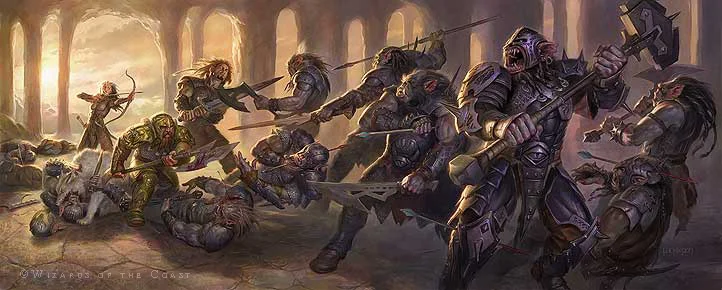
A depiction of orcs from the D&D 3.5E module Sons of Gruumsh. Art by Todd Lockwood.
Adventure Hooks
We’ve got to get the players to Xûl-Jarak! If they’re travelling near Brindol or Marthton, use A Wounded Horse Thief. If they’re already at the city, or nowhere near the city, have the Lord of Brindol send a knight to summon the heroes to his estate and proceed with Strange Diplomacy.
A Wounded Horse Thief
Begin with “On the roadside.” Shortly afterward, “Horse Justice” occurs.
On the roadside: “A motionless body lies in the road, wearing many heavy grey cloaks despite the summer heat. An arrow juts out of the body.”
- Figure: An orc. Barely lucid; bleeding badly. Repeats in heavily accented Common “Help me…” before fainting. Wrapped in a heavy cloak.
- Orc: A young male orc named Bula, of the Brown Clay family. Singlemindedly relentless in his mission; speaks little.
- Bleeding: At 0 hit points and has 2 levels of exhaustion. Without basic care (water, binding his wounds) the orc will die of blood loss.
- Helping Bula: If conscious, Bula explains that reaching the “leader of Brindol” with his message can save many lives.
- Cloaks: Not many layers of cloaks, but actually a single moch of muddled greys and greens, soaked with blood. Within are Bula’s possessions: a half-empty horn of fermented goatsmilk, a coin pouch (16sp), and a scroll.
- Scroll: Ink on parchment. “To the leader of the humans: I turn to you as a final hope. To save our people from war, send your mightiest champion to Xûl-Jarak. — Dansha”
- Arrow: Of human manufacture. Bula was shot this morning by a Marthton rancher while stealing a horse to reach Brindol. He galloped away, but fainted and fell off. Bula will admit to stealing the horse, arguing it was to save lives.
- Hoofprints on the road: Panicked horse hoofprints lead off the road and into the wilderness. Following them takes several hours; the dead horse is being eaten by a pack of wolves.
Horse Justice: “A group of riders approaches at a gallop, kicking up dust. They wave and shout: ‘Seize that orc!’”
- Riders: 8 humans (guard stats) from Marthton, led by Gwynedd (human female, headstrong, tanned from working fields).
- Mission: They want vengeance for a hamlet near Marthton that was raided by orcs (this was Gorak not Bula) two days ago. Recognizing Bula as the horse thief and assuming he is one of the raiders, they aim to take him back to Marthton to stand trial.
- Absolutely not: If the heroes prevent this, Gwynedd vows to brand the PCs as criminals harboring a fugitive. Facing a dangerous looking group, she won’t resort to violence. How this impacts the politics of the human army at Brindol will be detailed in a future post.
- “Take the thief away!”: Gwynedd takes Bula to Marthton, where he is hanged. She implores the heroes to do what the farmers fear: follow the trail of the orc raiders back to their camp — some farmers were not killed, but instead taken captive! Gorak’s hasty trail leads to Xûl-Jarak.
What’s Next? If the heroes reach Brindol with Bula, or bring the scroll to Lord Esmond of Brindol, proceed with Strange Diplomacy. If they head straight to Xûl-Jarak, either after reading Dansha’s letter or by tracking Gorak’s raiders, proceed with Traveling to Xûl-Jarak.
If the heroes never encounter Bula, he dies on the road. Edern and Gwynedd find his body and the scroll, and travel to Brindol to seek compensation for their stolen horse in exchange for the message. The scroll reaches the desk of the Lord of Brindol.
Strange Diplomacy
Either the heroes request an audience with Lord Esmond of Brindol to discuss the message from the orcs, or Lord Esmond receives the scroll and requests the heroes visit him. In either case, he decides that the PCs are perfect for the job: they are both capable and not tied up administering the war effort.
Bula’s Plea: If the heroes brought Bula to Lord Esmond, Bula will reveal all of the following information and answer any questions he can:
- The orcs of the plains are gathering at an ancient burial site called Xûl-Jarak to vote on whether to go to war against the humans.
- An orc called Gorak, leader of the Red Tusk family, has convinced the other orc leaders (Mûgdûl and Thrull) to ally with the Red Hand.
- Bula’s family leader, an orc called Dansha, has a risky plan to stop the vote. She needs a powerful warrior to pull it off. Bula does not know that Dansha’s plan includes single combat to the death.
What Esmond Knows: Lord Esmond provides the following information if asked:
- The farmers of Marthton have been dealing with escalating raids for the past few years. Frustration is building.
- Orc merchants always blame other groups of orcs for the raids. Esmond has made good profits by trading them metal tools for hides and pelts.
- The orcs worship their own gods, and do not live in one place.
- Rumors say that orc witches can turn into great falcons (this is false).
Researching more: If Lord Esmond received the letter before reaching out to the heroes, or if given a few hours, he can provide additional information:
- Xûl-Jarak is an ancient orc burial ground. Outsiders are forbidden to tread there and killed on sight.
- The orcs place great importance on their traditional laws.
Ambassadors of Brindol: He asks the player heroes to be his ambassadors to the orcs, and will provide them with the following:
- Riding horses, one per hero.
- A small box containing a necklace and two bolts of fine cloth. The necklace is silver, with three rubies, and worth 500gp. The bolts of cloth are fine linen, dyed a vibrant blue, and worth 25gp each.
If Bula is present, he asks to guide the heroes to Xûl-Jarak.
If the players decide that their limited time is better spent opposing the Red Hand in other ways, the Lord of Brindol sends 3 of his best men-at-arms to Xûl-Jarak in their stead. The knights are unable to defeat Gorak in single combat, and the orcs join Azarr Kul. See Aftermath.
Traveling to Xûl-Jarak
Art by Vladimir Motsar.
If using the default setting, Xûl-Jarak can be placed in either the Brown Hills or the Golden Plains.
Given the relatively slow advance of the Red Hand Horde compared to PCs if they plan their path efficiently, traveling to and from Xûl-Jarak can be a good time sink to ramp up the urgency. For a standard challenge, place Xûl-Jarak 3 days travel from Brindol.
Following the remix goal of less filler content, no random encounters are necessary during travel. Narrating travel through the valley as the war progresses will be covered in a future post.
Arrival at Xûl-Jarak
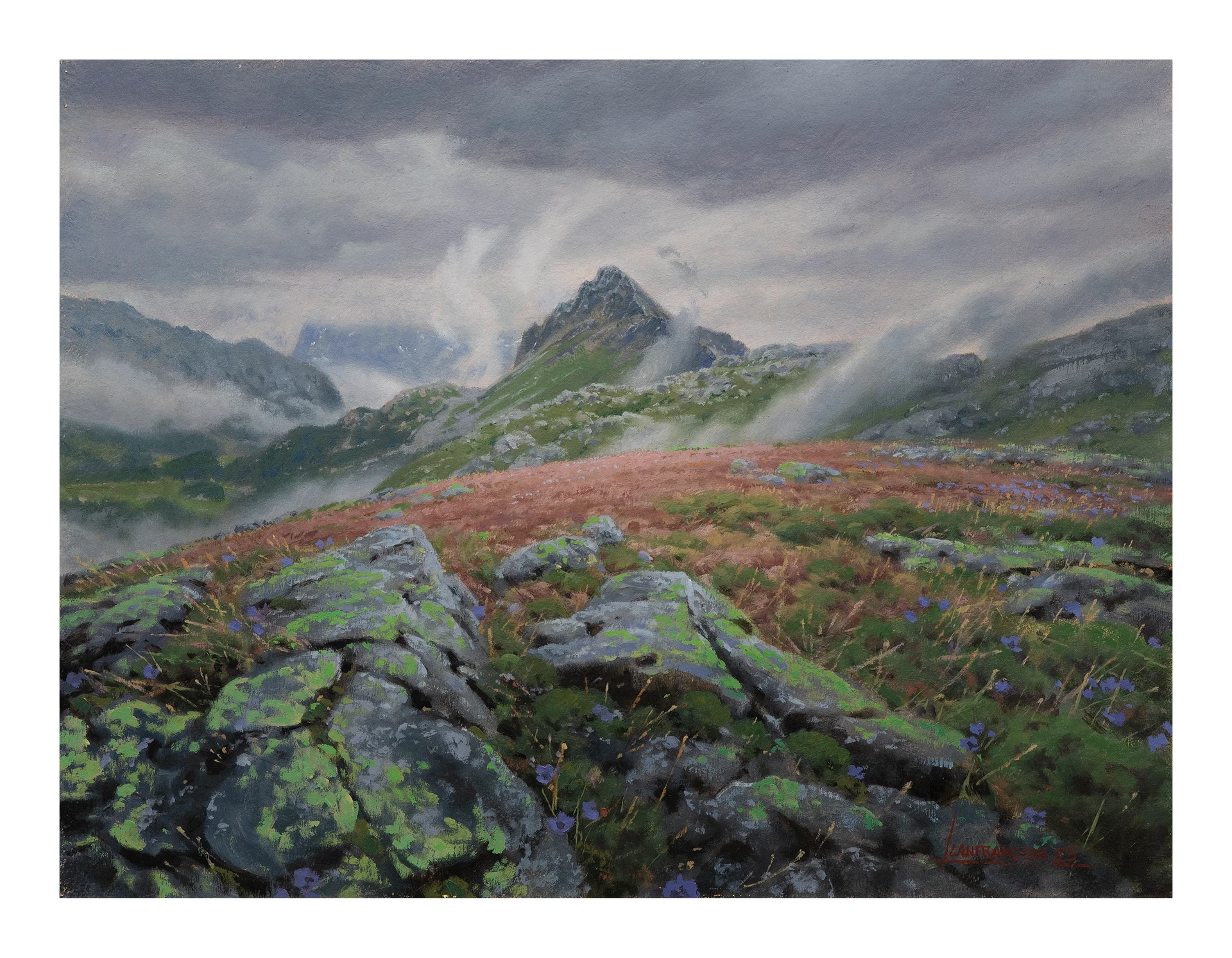
Art by Lorenzo Lanfranconi.
As the heroes approach
A Hidden People: “In the distance, many thin columns of smoke rise over the horizon. As you get closer, you see many herds of sheep and goats among the scrubby grass and rocky ground, but no tents or buildings. Birds circle above the flocks.”
Perception Check: Players with passive perception 15 or greater notice that among the rocky grassland are many moving figures, camouflaged by bulky grey cloaks that blend into the plains and obscure their silhouette (these are mochs). If they are with Bula, he will point them out by demonstrating with his own moch.
In the open rocky ground of the plains around Xûl-Jarak it is difficult to avoid being spotted by a picket of orc sentries. If they manage to remain undetected, they reach Xûl-Jarak as The First Amgraz begins. Otherwise they encounter Gorak’s Welcome first.
Gorak’s Welcome
A group of orcs moves to surround the party before they reach the herds. There are 15 orcs, led by Gorak’s lieutenant Lokara. Each orc wears a heavy moch even in the hot summer sun.
Lokara: A male orc loyal to Gorak, and a recent convert to the worship of Tiamat. His goal is to prevent the heroes from reaching Xûl-Jarak and aiding Dansha. Lokara will bid the heroes halt and first attempt to learn as much about them and their intentions as possible. Then if they are not accompanied by an orc who knows the traditional laws (like Bula), he attempts to trick them into turning around:
- Xûl-Jarak is a sacred orc burial ground and only orcs of the four families are allowed.
- This is true, except that the PCs are Dansha’s guests, and so are permitted under the traditional laws. If they declare this, Lokara demands evidence that they are guests (with the goal of seeing the letter and uncovering Dansha’s plan), but knows he cannot now justifiably stop them if they ignore him and push forward.
- It is tradition that emissaries and guests bring tribute as a sign of respect.
- Like, maybe, that nice box from Lord Esmond. Lokara will appraise their equipment and attempt to extract as much out of them as possible. If they have obvious magic items, Lokara will claim that coin is of no useful value to the orcs of the plains and push for an item.
- This is technically a true tradition, but not required, and Lokara is using it maliciously to drain the heroes of their resources.
Stats: This is intended to be a challenge that cannot be solved with violence. If it comes to blows, the heroes should win easily. Lokara is statted as an Orc War Chief (MM ‘14) and the other orcs are each an Orc (MM ‘14).
Aftermath: If the heroes attempt to fight their way through, they have broken the traditions of Xûl-Jarak and are not permitted entry. The orcs will attack them on sight (see Mischief in Xûl-Jarak), and the four families ally with the Red Hand and join the army marching on Brindol. If they push past Lokara without declaring they are guests of Dansha, he attacks them as trespassers and the same occurs. Otherwise they have justified their presence, and he is forced to let them through.
The PCs arrive as a showdown begins.
The First Amgraz
Design Note: The purpose of this cutscene is threefold: to establish Gorak as a heinous villain, to demonstrate the procedure of the Amgraz, and to introduce the major NPCs. Play up Gorak and her gory victory!Seeing Xûl-Jarak: “Herds of goats and sheep bleat in the summer heat. Hundreds of orcs in heavy grey cloaks converge on an otherwise unremarkable section of rocky ground. Many watch you curiously, but most move inwards.
Nearing them reveals their focus: a deep pit 40ft across, like a giant well walled with great stone blocks. Orcs climb down steep steps and rope ladders, spreading out across ledges and caves until the sides of the pit are blanketed in a vertical wall of figures.”
If Bula is present: “Bula gestures to hurry: ‘Quickly! It’s starting!’”
Amgraz Rituals: “The gravel bottom of the pit is clear except for two figures. The first is a young and muscular orc woman. A green gemstone blazes in her hair, and she holds a shining golden greatsword. The second is an old, grey orc man, unarmed. They flank a small dome of purple stone embedded in the center of the pit.
An orc man covered in lichens approaches the young woman. He looks troubled, but chants a prayer and wards her (the spell is Sanctuary). A hunched orc woman in black robes follows him, and presents a copper bowl of liquid to the woman. She drinks as fire dances across her skin, and readies her sword.”
If Bula is present: He identifies Gorak, Thrull, and Mûgdûl. He doesn’t know the old orc man, but sighs at his lack of weapons: “He seeks to shame her. But Gorak won’t notice.”.
The Duel: “She sneers at the old orc in front of her. ‘You fight for a lost cause, uncle.’ The unarmed orc raises his fists slowly. ‘The fight ended when you spurned the old gods for a new one. I can only show my disgust now.’ In a flash, two mighty cuts of the shining greatsword spray gore as the old man is rent asunder into three separate pieces. Dropping her sword, the orc presses her palm into the pooling blood and holds it, dripping, to the audience: ‘Praise Tiamat!’
The orc man covered in lichens and moss steps forward again. ‘The Rite of the Amgraz is satisfied. Rest, and be solemn.’ Noise returns to Xûl-Jarak as the orcs stir and begin to prepare for nightfall.”
Afterwards, an orc of the Brown Clay family taps the heroes on the shoulder and leads them to Dansha’s Plan.
Chapter 2: Strangers in Xûl-Jarak
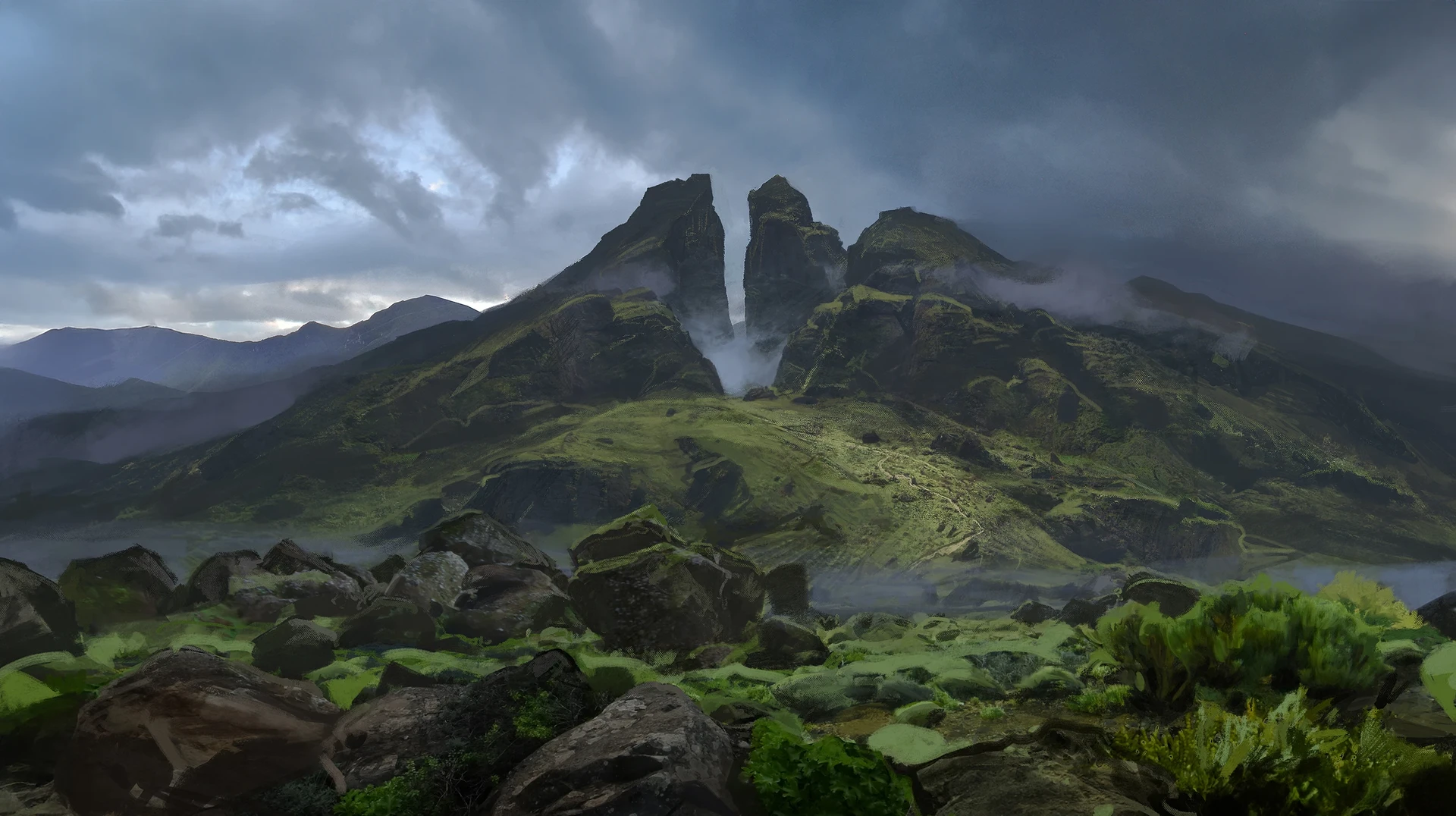
Art by Tomas Honz.
After the PCs arrive at Xûl-Jarak and witness the Amgraz, proceed with Dansha’s Plan.
Dansha’s Plan
After the conclusion of the Amgraz, Dansha is eager to meet the heroes that are her last hope. She will pull them into a private Brown Clay family cave in the walls of Xûl-Jarak for a meeting. If Bula is present, she thanks the heroes for saving him and sends him away to rest and heal from his arrow wound.
Time for a Q&A!
Dansha introduces herself, explains her plan to the heroes, then asks what help they need.
Design Note: This is a lore dump where the PCs can rest, get their bearings, learn everything they want to know, and devise next steps. Dansha can chime in to prevent players from coming up with schemes that will fail due to misunderstandings or bad GM descriptions. Have her prompt the heroes to tell her their ideas! This helps the GM start to map out the next few scenes.The Plan: Dansha’s plan is simple, and she conveys the entirety of it to the PCs:
- Tomorrow at midday, the four families will vote on whether to go to war. The Swift Flint family (Gorak) and River Silt family (Mûgdûl) will certainly vote yes. The Bright Chalk family (Thrull) seems to be leaning towards war.
- Either 2 or 3 votes will be cast in favor of war, but Dansha and the Brown Clay family have the right to an Amgraz duel to veto it. No orc has a chance against Gorak, so she will put forward one of the heroes. If they win, the war declaration is overturned as the war will be deemed inauspicious.
- Dansha is careful to emphasize that Gorak is a skilled warrior, possessing a “sorcerous weapon”, “wrapped in the blessings of the Dragon Goddess”, and “made mighty by Mûgdûl’s foul concoctions”. They will not win by shoving their beefiest warrior into the ring without any preparation.
- “Mûgdûl is brewing something foul in the River Silt catacombs to empower Gorak. If you can sabotage it, it will greatly increase our chance. Better yet, find proof of her turning from our gods, and we might have more luck turning Thrull to our side.”
- Dansha will warn the PCs that violence and theft are not allowed at Xûl-Jarak, and the Malgûl ensures truthfulness from suspects.
What Dansha Knows: Dansha can fill in the PCs on the story so far:
- Roughly eighty years ago, before Dansha was born, the orcs witnessed the sun turn red. For a day, the world was cast in crimson shades and the seers declared it an ill omen. Later, through travelers and traders, they learned that it marked the birth of the Son of the Dragon, and heard about the battles to the north between the humans and the Red Hand.
Design Note: The remixed Azarr Kul backstory, war with Rhest, and Red Sun will all be detailed in a future post.- Ten years ago, a few weeks after Dansha became the leader of the Brown Clay family, a mountain orc named Ulwai came to her with gifts of silver. She brought shining golden symbols of her goddess, the Dragon Queen, and offered metal tools and weapons in exchange for worship. Dansha turned her away, but Ulwai certainly visited the other three orc families as well.
- Four years ago, rumors spread that an orc of the Swift Flint family had slain a Behir and discovered the Star of Groth, a symbol of orcish leadership and sign of great might and spirit. This orc was Gorak. Soon after, Gorak became the leader of the family after an Amgraz challenge.
Design Note: A nod to Varanthian, who is removed from the remix.- Today is the first time that all four families have gathered since Gorak became leader. Now both Mûgdûl and Gorak bear the Red Hand, and spread word of the great warlord in the mountains: the Son of the Dragon.
And answer likely questions:
- What should we do next? Dansha cautions them to sleep first before approaching other orcs. The death of Baglu calls for an evening of solemn reverence as she is laid to rest by her family, and it is not a time for socializing. Dansha will offer a place among the caves of the Brown Clay family for the heroes to rest and sleep. Tomorrow, they should do everything in their power to ensure the evening duel will go in their favor.
- What will get us in trouble? See Mischief in Xûl-Jarak.
- Who is Gorak/Mûgdûl/Thrull? See Major NPCs.
- Where will Gorak/Mûgdûl/Thrull be? Dansha knows where Thrull will be tomorrow. She guesses (correctly) that Mûgdûl will be brewing a potion in her family tombs for Gorak. Gorak will be preparing for the fight somewhere.
- What is the Star of Groth? See The Star of Groth.
- What else is happening tomorrow? Orcs will continue to arrive to witness the vote, which will occur during a great feast at midday. The Amgraz duel will be scheduled for sunset.
- What do you know about the Red Hand? A ranger who has been tracking the Red Hand is visiting Dansha tomorrow. He will know more.
- What is this place? See Exploring Xûl-Jarak: General Features.
- How many orcs are there? Roughly 400 in each family, of which 150 are suitable for battle (600 warriors across all families).
- Tell me more about orcs! See the cultural overview.
If the players sleep immediately, make sure to trigger the event “A Bump in the Night”.
Exploring Xûl-Jarak
Design Note: While the PCs explore Xûl-Jarak, use the events Feast and Vote and Azarr Kul Arrives to tighten the pacing of the adventure. The vote occurs around midday, so if the players are spinning their wheels without progress in the morning, have it begin! Do the same with the arrival of Azarr Kul in the evening. Don't forget to have A Bump in the Night occur on the first night!
General Features
Xûl-Jarak, the “Hidden Maw”, is an open cylindrical pit 40ft wide and 120ft deep. It is invisible to anyone more than a few feet away as the opening is flush with the rocky ground.
The rocky walls of the pit are riddled with ledges and cave entrances. To access them, the orcs have constructed rope ladders and carved handholds into the rock. There are so many places to stand that when a ceremony occurs, viewers cover the walls from the pit floor to the upper lip.
The bottom of the pit is similarly a circle 40ft across of solid bedrock. In the center, jutting out of the floor, is a 5ft dome of porphyry purple stone. This is Malgûl, “the Drinker”.
Malgûl
Appearing as a flecked purple dome embedded in the ground, the Malgûl-stone is a pillar sunk into the earth of which only the top is visible. An ancient artifact closely guarded by the orcs of the region, the Malgûl is a sacred symbol of alliance and confederation.
- A permanent 15ft radius Zone of Truth is centered on the stone which cannot be saved against. Successful magical attempts to dispel the zone merely suppress it for a number of minutes equal to the level of the attempted spell.
- A willing creature touching the stone can swear an oath and smear their own blood on Malgûl. If the oath is ever broken, they take 10d10 psychic damage and this effect ends. If this damage reduces them to 0 hit points, they die.
- Any liquid touching the stone is absorbed by it and disappears.
Specially prepared ritual ûlag is poured over the stone by the orcs to consecrate significant events.
Cave Systems (Catacombs)
Countless tunnels and warrens twist through the rocky ground surrounding Xûl-Jarak. Their entrances look out from the walls of the pit itself.
The dark caves have been excavated into a network of catacombs, the rock surfaces carved with the traditional familial patterns of the orcs (seen also woven into mochs). Unlike traditional catacombs, they do not contain bodies but instead hold countless mochs placed in niches and ossuaries. See an example.
Each family maintains several different sets of tunnels, marked with their respective familial patterns. Older abandoned sections contain dead or migratory families (Great Shale, Running Gravel, etc.).
The Orcs
Xûl-Jarak is busy with several hundred orcs moving about. Everywhere you look within half a mile of the pit there are orcs:
- Herding goats and sheep.
- Spinning, dyeing, and weaving wool into new mochs.
- Climbing into the pit to visit their family catacombs.
- Making jerky and ûlag.
- Heading out with falcons to hunt game.
- Catching up with old friends around a fire — dicing, playing bone flutes.
During the night, the orcs sleep in the open in the mochs among their herds.
Mischief in Xûl-Jarak
Theft, violence, and trespassing on other families’ ritual tombs are all forbidden at Xûl-Jarak.
Any orc may accuse another of a violation. Both parties are brought to the Malgûl, where any family leader is welcome to be present and interrogate both the accuser and the accused. As the Malgûl ensures honesty, this is generally considered foolproof and therefore the final word of the matter.
If someone has violated the rules of Xûl-Jarak, they are exiled from their family. In the case of a non-orc, this means they are no longer a guest and therefore must be killed as they have trespassed at Xûl-Jarak.
If the accusation turns out to be false, it is greatly shameful for the accuser and they (and usually their family leader as well) lavish gifts upon the accused as penance.
Event: A Bump in the Night
This event occurs the night before the vote, after the players arrive.
A Ritual Gone Wrong
Mûgdûl and Gorak perform a nighttime ritual to prepare for the duel. It goes wrong.
Events: Mûgdûl and Gorak perform a rite to Tiamat in the River Silt catacombs. The nearby altar to an orcish god tampers with the spell, and Gorak is cursed.
What the heroes know: “Dark dreams haunt your sleep — a forest burns, blood spills, and you feel an indescribable hunger. Something massive stirs beneath the earth. You awaken suddenly as a muffled blast rumbles through the ground beneath you, then all is quiet.”
This wakes all the orcs near Xûl-Jarak, and all describe the same dreams. If the heroes investigate the pit they witness an unconscious Gorak being carried out of the River Silt catacombs, which swarm with orc warriors loyal to the Red Hand.
When the heroes wake in the morning, run Rumors: Gorak’s Injury.
Rumors: Gorak’s Injury
Gossip about the night’s events spread quickly among the orcs — something is wrong with Gorak. The rumors conflict:
- A human assassin (or maybe Dansha’s new mysterious guests) snuck into the camp and wounded her with a sinister poison before escaping.
- A wicked spirit emerged from the tombs and Gorak was badly wounded defeating it.
- The gods cursed Gorak for fighting an Amgraz to the death unnecessarily.
The orcs are abuzz. Any orc of Dansha’s family shares the rumors with Dansha, and the heroes if they ask.
Location: Dansha
Dansha sits with her herd away from the bustle of Xûl-Jarak, preferring solitude.
Yrryg’s Dark Tidings
Milking goats: “Dansha sits on the rocky ground, milking a goat into a leather skin. Whispering to her is a weathered and rugged orc, his moch worn and matted, with a great falcon on his shoulder.”
- Goat: Dansha is preparing the ûlag.
- Rugged Orc: Yrryg is a young male orc, weathered beyond his years by harsh living. He eschews any of the four families, preferring to travel far and wide alone. He regularly passes information to Dansha, who once saved his wounded falcon. See below for his conversation with Dansha.
- Falcon: Named Yshnag. See falconry.
Yrryg the Wanderer: Yrryg, like Dansha, has been worried about the growing influence of the Red Hand. He has traveled far to bring her news of their invasion of the valley. He brings a list of troubling news:
- The human druids of the wood are convening in a high council soon at the Great Oak. Yrryg does not know why.
- This adventure will be detailed in a future post.
- The Red Hand has allied with the lizardfolk tribes of Rhest. They whisper of dark and powerful rituals being performed in the flooded city.
- If the PCs already visited Rhest and stole the Ghostlord’s phylactery, you can point them towards the Ghostlord’s lair instead.
- The dwarves have barricaded themselves in their mountain stronghold and refuse to emerge. Yrryg does not know why.
- This adventure will be detailed in a future post.
Dansha’s Help: Dansha encourages Yrryg to share all he knows with the heroes. Yrryg is also an expert at navigating the valley and its environs, and can suggest speedier paths through the wilderness.
Location: Thrull
Design Note: Thrull adds negotiation to the adventure and demonstrates the allure of the Red Hand. If you're short on time, or want to keep the PCs moving, you can cut Thrull and the Bright Chalk family entirely.
The heroes may hope to sway Thrull and the Bright Chalk family to their side.
Social Fabric
Repairing Mochs: “A large group of orcs sits on the plains among simple looms, spinning wool into yarn. Thrull sits among them, weaving a new section for his moch. They speak amongst themselves of the war.”
Negotiating with Thrull: Thrull is a measured leader. He wants to show his people that he treats guests with respect, and is willing to talk with the heroes. At the same time, many orcs would distrust him if he seemed to be too receptive to outsiders. He won’t chat for long.
- Strategy: Thrull is open and honest throughout the negotiation. He will explain that he must have the support of his family, and many will not like if he seems too receptive to outsiders. He will voice his motivations if they are appealed to.
- Stakes: If the heroes are sufficiently convincing and make an offer that will greatly benefit the Bright Chalk family, Thrull will vote against war (if this occurs before the midday vote) and grant them the benefits of a prayer (Sanctuary) in the upcoming Amgraz duel.
- Motivations: Appealing to Thrull’s motivations increases his interest.
- Resources for the family: The Red Hand has gifted them metal tools. They promise the fertile fields of the valley for grazing once the humans are defeated.
- Subordination: Thrull fears that Azarr Kul sees the four families as vassals rather than allies. Gorak’s praise of the Son of the Dragon is worrying.
- Divine Favor: Gorak found the Star of Groth, and appears favored by the orcish gods despite her turn to Tiamat. If the heroes can demonstrate that this was a setup or that the orc gods do not approve, Thrull is greatly swayed.
- Pitfalls: Appealing to any of these pitfalls confirms Thrull’s worst doubts about humans: they do not understand or respect the traditions of the orcs. He chooses to ally with the Red Hand.
- Ignoring the vote: that Thrull stay at peace despite the results of the vote or Amgraz challenge.
- Mischief in Xûl-Jarak: the heroes reveal that they are willing to break the truce of Xûl-Jarak by stealing or fighting.
- Other Topics:
- The Dragon Goddess: The worship of Tiamat is foreign to the four families, but the orcs have many gods. In fact, Tiamat’s blessings seem more tangible than most. Thrull sees no technical problem with this addition to the orcish pantheon, though he disapproves of her tenets.
- His People’s Safety: Thrull understands that war means death. But war also means loot and great deeds. There are many orcs that hunger to show their bravery, even if Thrull knows the cost may not be worth it.
Location: Mûgdûl
The River Silt Tombs
Deep in the tombs of the River Silt family, Mûgdûl prepares a potion for Gorak. Hidden within is a shrine to Tiamat and secret correspondence with the leaders of the Red Hand.
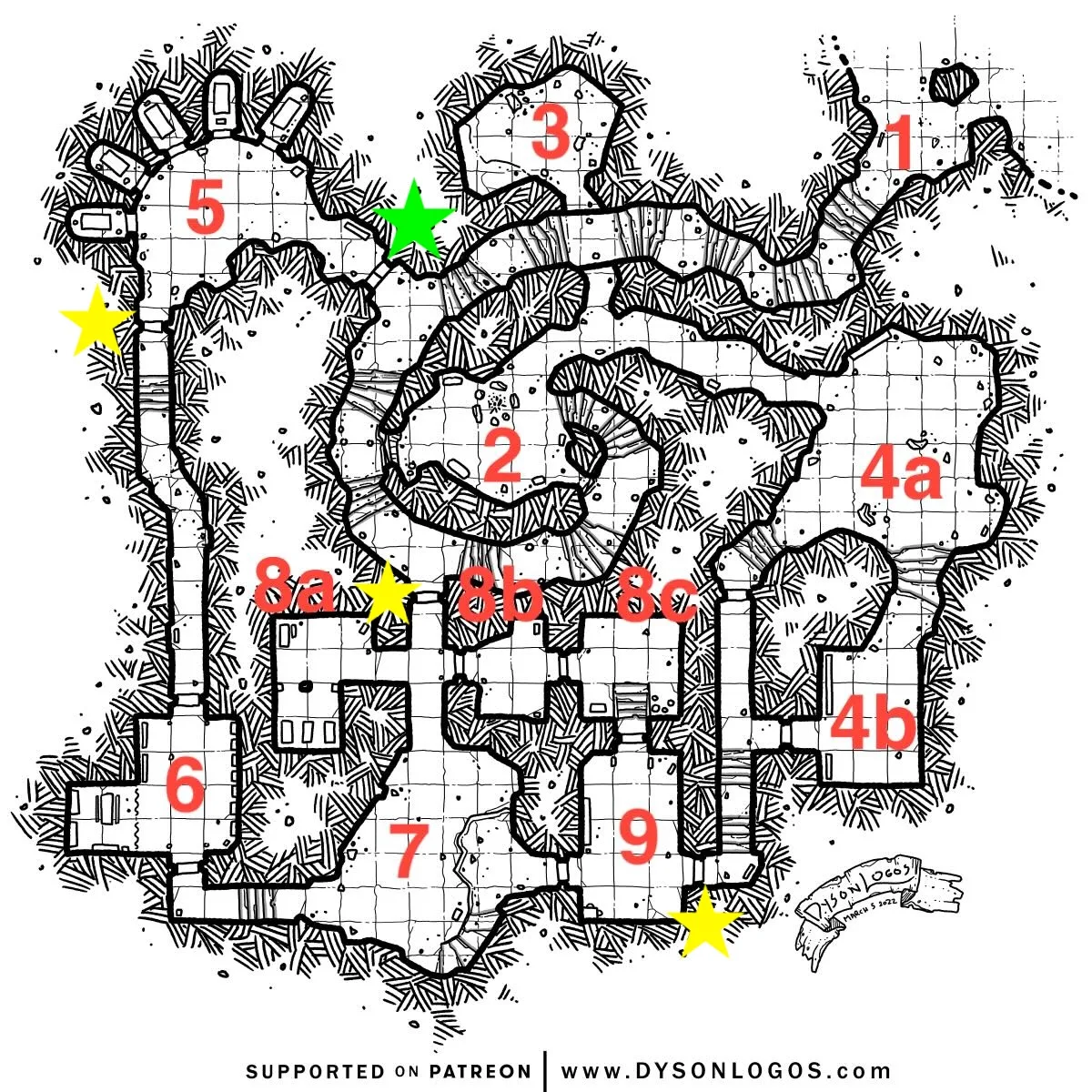
Map by DysonLogos.
General Features
Floors, Walls, and Ceilings: Chiseled stone. Intermittent swirling carvings denoting the River Silt family. Sharp gravel chips cover the ground.
Doors:
- Green Star: Heavy stone double doors, magically sealed as though by an Arcane Lock with the password “River”. Inscribed in orcish with the riddle2: “I have a mouth but never speak. I have a bed but never sleep. I run smoother than any rhyme. I love to fall but cannot climb.”
- Yellow Star: Stout wood (AC 15, 24HP), muted by age. Locked (key is on Mûgdûl). DC 15 to pick.
- Unmarked: Stout wood, muted by age. Unlocked.
Light: Dark, unless otherwise specified.
Inhabitants:
- Orc Workers: Relaxing in 2: Workers’ Camp, but periodically move to 3: Worksite and periodically enter and exit through 1: Entrance. Absent during the vote.
- Orc Guards: Dicing in 8a, but move to investigate disturbances.
- Mûgdûl: Brewing a potion in 9: A Poison Pill. Absent during the vote.
- Orcish Spirits: Always in 5: River Silt Tombs.
1. Entrance
"One of many tunnels (dark, hidden) that open into Xûl-Jarak (airy, bustling, loud)."
Tunnel: The cave entrance is roughly halfway up the pit (60’ from the bottom, 60’ upwards to the surface). Patterns (chiseled, intricate, winding) carved into the rock walls denote the River Silt family (Mûgdûl’s family). Voices (deep, laughter) drift upwards from the dark (from 2. Workers’ Camp).
Xûl-Jarak: The pit of Xûl-Jarak is busy even at night with orcs climbing up and down to access various ancestral catacombs. See Exploring Xûl-Jarak: The Orcs.
2. Workers’ Camp
During the feast event, the orcs are not present.
"A fire (small, cozy) flickers in this vaulted chamber (dark, ominous) where three orcs converse (deep voices, laughter). Meat sizzles (aromatic, dripping fat) on a spit."
Fire: A small campfire casting bright light. A pair of hares turn on a spit.
Chamber: Natural stone, smeared with deep blue pigment (powdered, ritualistic). The ceiling (35ft, sooty) is hidden in darkness and has a flue for smoke.
Orcs: Three River Silt orcs with tools (chisels, pickaxes) rest around the fire, throwing bone dice. They excitedly discuss the Gorak’s alliance with the Son of the Dragon (reverent, impressed, curious).
3. Worksite
"A low chamber strewn with rubble and rock dust (dusty air, messy)."
Rubble: Ordinary. This chamber is in the process of being excavated by the workers in 2 to be like 4a.
4. Burial Chamber
4a: "Countless mochs (shaggy, ragged, woolen) hang from the low ceiling, shrouding the room in curtains of ancient garments (heavy to push through, muffle sounds)."
Mochs: The mummified garments of long-dead members of the River Silt family. A few newer mochs are still in good condition.
4b: "Neat rows of niches (decorative patterns) hold mochs (dry, disintegrating)."
Niches: Each niche holds an ancient moch and is carved with the deceased’s personal pattern (intricate, repeating). In 6 of the niches, the moch is wrapped around a silver death mask (solemn, serene, 200gp) depicting the moch’s orc owner.
5. River Silt Tombs
Note: Ignore the five alcove doors denoted on the map.
"Fluorescent whorls of pigment (luminescent, sea green) glow across the ceiling. Five alcoves each hold a graven sarcophagus (solid, stark)."
Pigment: Great spirals of twinkling green smeared like flowing water. Casts the chamber in dim light.
Sarcophagi: Heavy stone lids that crash to the floor loudly if shoved. Inside each are two skeletons (orc and falcon, ancient) wrapped in moch (crumbles to dust).
- 2nd sarcophagus: contains a stone idol (orc, squat, grinning, rubies for eyes, 1800gp). Vengeful spirits (howling, famished, consume light) rise if opened.
Vengeful Spirits: An orc spirit (stats as Wraith (MM ‘25)) and falcon spirit (stats as Will-o’-Wisp (MM ‘25)). Howls (in orcish) “DESECRATION!”; attacks until the shrine in 7 is restored. Will not move further than 30ft from the idol.
6. Red Hand Lodgings
"Two cots (simple, unused) and a cluttered desk furnish this otherwise bare room."
Cots: Pushed against a wall. For when the Red Hand sends emissaries not accustomed to sleeping in moch.
Desk: Covered in letters and a notebook. An inkpot, quill, and extinguished candles adorn a corner.
- Letters and Notebook: Letters between Mûgdûl and the Red Hand. Mûgdûl’s notebook on the rituals of Tiamat. See Mûgdûl’s Desk.
7. Shrine to Tiamat
"Torches blaze on the walls. Piles of debris (wood, rocks, rubble) coat the floor and dust falls from fractures (fresh, unstable) in the ceiling. A golden incense burner (alluring, wicked) gleams among the wreckage."
If storage guards are present: "Loud voices echo from the northern hallway."
Torches: Illuminate the room in bright light. The sconces are damaged (tin, dented) from falling debris, but the torches have been freshly replaced since. Smoke rises through the cracks in the ceiling.
Mounds of Debris: A search through the rubble uncovers, discarded in the corner, an orcish stone idol (squat, grinning, belly polished from rubbing for luck) and 5 human corpses (bound, necks slit, drained of blood (sacrificed last night)).
- Human Corpses: Gorak raided a hamlet near Marthton, taking 7 farmers prisoner to be sacrificed to Tiamat. Names: Ayden, Lucas, Margie, Rhian, Brenna.
Unstable Ceiling: Disruption or damage to the ceiling collapses it, burying the chamber and dealing 12d6 bludgeoning to anyone inside. Rooms 6, 8a, 8b, 8b, and 9 each have an individual 3-in-6 chance of a similar collapse occuring one round later.
Idol: A dented golden censer (5-pointed, extinguished, etched with dragon imagery, embedded rubies, 2500gp) sits atop a bloodsoaked stone altar (orcish patterns, unadorned, blood is dried and sticky, covered in debris).
8. Storage Rooms
The orc guards move to investigate loud noises in nearby rooms. They are present even during the feast.
8a: "A lantern glows beside two orcs (friendly arguing, loud) throwing dice (clattering) amid stacks of supplies."
Lantern: Casts the room in bright light.
Orc Guards: Wear the Red Hand (red powdered pigment) on their mochs. Loyal members of the River Silt family and converts to Tiamat. Stats as Orc Eye of Gruumsh (MM ‘14). Names: Darû, Syrrg. Posted by Mûgdûl to prevent trespassers.
Supplies: Bundles of dried jerky. Ceramics of fresh water and fermented goatsmilk. Raw wool. Coarse woven textile. Spears, bows, arrows. Spices and pigments.
8b: "Choking vapors (moist, sticky, pungent) fill the air. Two bound figures (filthy, feverish, delirious) slump against the wall."
Vapors: Burr burns in a small ceramic bowl, keeping the prisoners docile. The room stinks with it, and it stings the eyes and throat.
Prisoners: 2 human farmers (drugged, recoil from light, incoherent), captured when Gorak raided a hamlet near Marthton. The other 5 captives have been sacrificed. Names: Rowena, Cadwyr.
8c: "Shelves covered in bottles lean precariously. Bunches of dried herbs hang from the ceiling."
Bottles and Herbs: All manner of spices, herbs, fungi, and specimens. Roll 1d6 per row for a random ingredient. If searched meticulously, see Special Items.
| Ingredient | Ox Urine | Henbane | Fennel | Blue Honey | Newt's Eye | Psyllium |
|---|---|---|---|---|---|---|
| Preparation | Dried | Pickled | Smoked | Ground | Salted | Juiced |
| Use | Laxative | Painkiller | Reagent | Stimulant | Inebriant | Aromatic |
Special Items: 1 Potion of Cold Resistance. 1 Potion of Invisibility. 2 Potion of Healing. 4 Acid (vial). 3 Antitoxin (vial). 1 dose Carrion Crawler Mucus (poison). 3 doses Malice (poison).
9. A Poison Pill
During the feast event, Mûgdûl is not present. If it is near sundown, Mûgdûl is bottling the completed potion.
"Candles (melting) flicker. A small cauldron (frothy, rust-colored liquid) bubbles above coals."
If Mûgdûl is present: "An orc in black robes (muttering, focused) is hunched over the brew."
Candles: Cast the room in dim light.
Cauldron: Contains a burnt-red liquid (viscous, boiling) — the beginnings of a Potion of Fire Breathing. The 8-hour brewing process is delicate and can be easily tampered with to create an obviously ruined potion. Ruining it subtly is difficult and requires expertise.
Orc Witch: Mûgdûl. Leafing through an alchemical tome to brew a Potion of Fire Breathing for Gorak to drink before the duel. Stirring the cauldron, adding ingredients.
- Confronting Mûgdûl: Mûgdûl knows she is outmatched and aims to avoid a fight by reminding the PCs of the rules of Xûl-Jarak (see Mischief in Xûl-Jarak). She will not attempt to publicly arraign them at the Malgûl for trespassing for fear that they expose the desecration of the orcish shrine, but will retaliate if the truth becomes known.
Other: A hammock hangs in the corner of the room. Roots slither along the floor and up the walls.
Location: Gorak
Soak It In
Gorak, injured and cursed by the misfired ritual, is being tended to half a mile from Xûl-Jarak, away from prying eyes.
Setup: Gorak is guarded by 12 loyal Red Hand converts (stats as Orc Eye of Gruumsh (MM ‘14)) pretending to dye spun wool in ceramic vats. The Swift Flint priest has attempted to cast lesser restoration to no effect. Gorak rests while her falcon drinks from a bowl of fresh blood nearby. Azarr Kul has been notified of the curse by Mûgdûl and is en route.
Injuries: A wasting curse eats away at the right half of Gorak’s body, withering it. Gorak’s maximum HP is halved. A spell of potency equal to or greater than greater restoration is required to reverse it.
Event: Feast and Vote
The Amgraz Champions
Horns sound across the plains and the orcs assemble around the pit, sitting on the rocky ground as they pass out food and drink: honey, roast lamb and goat, ûlag, yogurt, root vegetables, and cheese.
Dansha approaches the PCs: “Which one of you will battle Gorak?”
All eyes turn to the four family leaders as they step forward.
- Gorak looks pale and sweaty, and is swaddled in her moch. “The Son of the Dragon heralds fortune and abundance for the four families. The Star of Groth lights the way forward. Swift Flint asks for war. I would give my own life in the Amgraz for this purpose.”
- Mûgdûl raises a gnarled finger to the sky. “The Red Hand waxes fullsome in its power. The omens are auspicious. The vultures signal bloodshed. I heed them. River Silt votes for war.”
Thrull clears his throat:
- If they PCs convinced him of peace: “Words of abundance obscure a newfound greed. Bright Chalk votes for peace.” Gorak and Mûgdûl glower.
- Otherwise: “The wisdom of our forebears teach us that great reward requires great risk. Bright Chalk votes for war.”
Dansha rises slowly. “This is not our fight. Brown Clay invokes the right of the Amgraz. [INSERT NAME HERE] will be the champion for peace tonight.”
Gorak is already gone, retreating to rest and have her curse tended to.
Chapter 3: Death at Xûl-Jarak
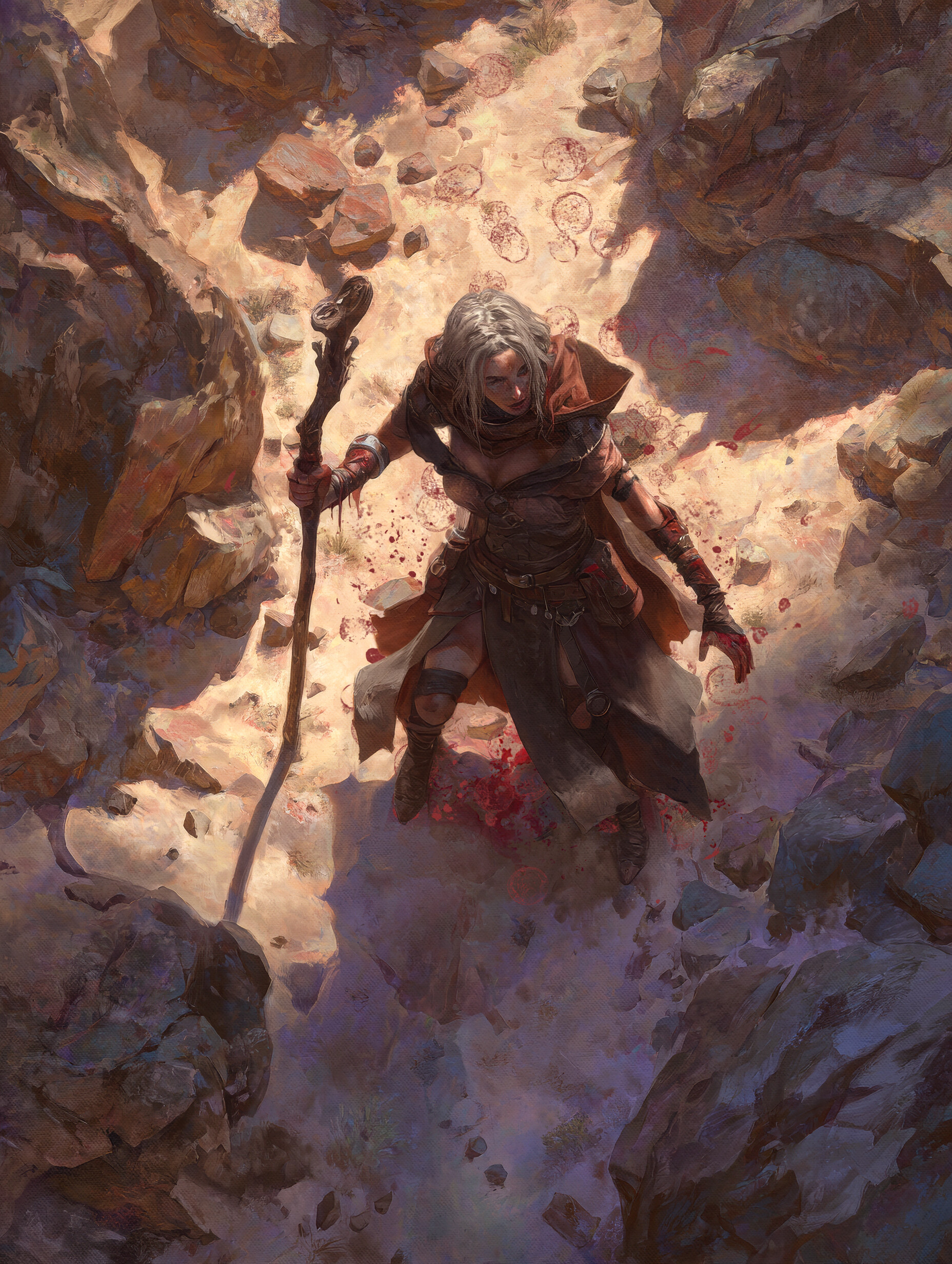
Art by Murat Gül.
Azarr Kul Arrives
Design Note: This is a rare chance for the PCs to interact with Azarr Kul without fear of combat. This is what the remix is for!
This event should occur towards the end of the day, as preparations begin for the duel and the orcs congregate around Xûl-Jarak. The Amgraz duel begins afterwards.
The High Wyrmlord
“A blast of thunder shatters the clear summer sky. A howling wind roars, ripping grass and shrubbery into the air. The ground shakes and orcs scramble in terror as the great blue dragon Tyrgarun lands. The dust clears, and off the dragon’s vast back steps Azarr Kul. The High Wyrmlord raises a clawed fist: (in orcish) ‘Tiamat’s blessing upon you. I claim my right to witness the Amgraz as a guest of Swift Flint.’”
The orcs stare in awe and fear as Gorak approaches the high priest of Tiamat. She casts off her moch to reveal withered muscle and deathly pale flesh. Chanting prayers to the Dragon Queen, Azarr Kul reaches out and dragonfire begins to dance across Gorak’s skin. She sinks to her knees, clearly in debilitating pain. Over the next minute, Azarr Kul casts
- Dispel Magic (removes magical effects the PCs may have applied)
- Cure Wounds (until Gorak is fully healed)
- Protection from Poison (removes poisoned; buffs for the duel)
- Death Ward (buffs for the duel)
- Aid (buffs for the duel)
- Greater Restoration (repairing Gorak’s flesh and removing the curse)
Afterwards Gorak rises, marveling at her repaired skin and divine blessings.
Reactions:
- Dansha and Thrull: doubting, fearful, pretending to remain unfazed in front of their families.
- Gorak and Mûgdûl: confident, assured, showboating.
- Other orcs: awed, scared, wondrous of the huge adult dragon. Many orcs genuflect; Tyrgarun ignores them, they are beneath him.
Villainous Retorts: Here are some campy lines for Azarr Kul to use if needed:
- “Play your games. Fight your little duel in the dirt. Entertain me!”
- “So these are the valley’s great defenders. I expected… more. At least the base animal instinct to flee when the shadow of the Dragon Queen falls upon you.”
- “You cannot stop a war eight decades in the making. No matter what you do the ending is already written. This valley will burn in Tiamat’s name.”
What’s Next: Azarr Kul and Tyrgarun watch the Amgraz from the upper lip of the pit. Neither will resort to violence, and hope to goad the heroes into attacking them. Azarr Kul is especially interested in observing the heroes fight, and knows that they have been the ones stymieing his plans. They leave immediately after the duel concludes and fly back to the Fane of Tiamat.
If you want to make things even crazier, or if Azarr Kul is unavailable, you can have Wyrmlord Kharn arrive on Abithriax or have Wyrmlord Ulwai arrive on the undead white dragon Varanthian (raised by the Ghostlord).
The Duel
Rules of the Amgraz
Any orc can convey the rules of the Amgraz. Violation is investigated with the Malgûl and punished with death.
- The duel ends when one participant is dead.
- When the duel begins, all must obey a vow of silence (clever PCs may be able to cast spells on their ally without verbal components).
- When the duel begins, no one may come near the participants or harm them (with either spell or weapon).
A Duel at Sunset
Death at Xûl-Jarak
“Horns blast as the sun nears the horizon. Looking up over 100ft to the surface from the bottom Xûl-Jarak, every inch of the pit walls are covered by orcs on ledges and ladders. Looming over the edge of the pit is the massive form of Tyrgarun, and beside him Azarr Kul’s armor gleams in the evening light.”
If Mûgdûl brewed her potion: She presents it and Gorak drinks.
Thrull prays to cast Sanctuary. If he was convinced to aid the heroes, he casts it on their champion, otherwise he casts it on Gorak.
Gorak draws her greatsword and raises it towards Azarr Kul. ‘Praise Tiamat!’
Running the Duel: Have all players roll initiative (see Mûgdûl’s Hex below). Gorak waits to use her Wyrmlure ability if the hero is protected by Sanctuary. If the hero reaches death saves, Gorak will not hesitate to attack them for the kill.
Mûgdûl’s Hex: During the first two rounds of combat, Mûgdûl slips into a dark, narrow fissure 45ft up the wall of Xûl-Jarak (DC 13 Perception to notice). From this hidden vantage point, she uses a Sympathetic Effigy (crude imitative doll woven from moch threads).
At the start of the third round of the duel, she begins channeling a curse. The dueling hero feels an unnatural, freezing weight settle over them (mechanical effect of Bane, no save) as their movements slow (DC 17 Perception or Arcana to recognize the pale tether of magic pointing at Mûgdûl’s hiding spot).
Mûgdûl’s Hex: The Silent Crowd The PCs must stop the magic, but the Rules of the Amgraz are in full effect:
- Complete silence must be maintained.
- No weapons may be drawn in the crowd.
- No one may interfere with the combatants.
Reaching Mûgdûl’s hidden crevice as spectating PCs move on their initiative counts requires a DC 15 skill check to overcome the difficult terrain of the crowd.
- Acrobatics/Athletics: To scale the walls of Xûl-Jarak, avoiding crowded ladders and steps.
- Stealth: To slip past a group of Swift Flint warriors blocking the way.
- Performance: To act naturally while moving to avoid unwanted attention.
Mûgdûl’s Hex: The Escape When the PCs finally reach the crevice, they find Mûgdûl holding the effigy, eyes closed, lips moving silently. Because Mugdul cannot afford to be publicly caught, the moment a PC breaches her hiding spot, she immediately snaps the effigy in half and ceases the spell. The curse on the dueling PC lifts instantly.
Mûgdûl simply places a finger to her lips, offering a wicked, toothy smile. She knows the heroes can’t attack her here without breaking the Amgraz peace. At the conclusion of the duel, she casts Etheerealness to attempt to slip away for the next 24 hours and avoid any retaliation.
Ending the Duel: The duel ends whenever one of the combatants dies. If Gorak is defeated, her corpse and possessions are retrieved by the Swift Flint family for burial. If a PC dies, Dansha hurriedly secures the corpse and rushes to help the remaining PCs escape (see Gorak Victorious).
PC Death: Don't worry! See Gorak Victorious for some options.
Gorak, Amgraz Champion: This 5e statblock is modeled after a level 7 barbarian.
Gorak, Amgraz Champion
AC: 14 HP: 95 Speed: 40ft Medium Humanoid, Orc
STR DEX CON INT WIS CHA 18 (+4) 12 (+1) 16 (+3) 10 (+0) 10 (+0) 14 (+2) Skills: Athletics (+7), Survival (+3), Animal Handling (+3)
Reckless Attacks: Gorak’s attack rolls have advantage, and attack rolls against Gorak have advantage.
Star of Groth: Gorak has advantage on Charisma checks involving orcs.
Beast Hunter: Gorak has advantage on Strength and Dexterity saving throws.
Azarr Kul’s Blessings: If applied: Death Ward, Protection from Poison, and Aid.
Mûgdûl’s Brew: If Mûgdûl’s Potion of Fire Breath is active, Gorak can breathe fire as a bonus action (3 uses, 30ft, 4d6 Fire damage halved on DC13 Dex save).
Multiattack (Action): Gorak makes two attacks with Wyrmwrath.
Wyrmwrath (Action): +8 to hit, reach 5ft, one target. Hit: 17 (3d6 + 7) slashing damage.
Wyrmlure (Bonus Action, 1/day): Wyrmwrath glows gold and transfixes onlookers. Choose up to five creatures that can see Gorak within 90ft. The targets must succeed on a DC 16 Wisdom saving throw or be paralyzed until the end of Gorak’s turn.
Adrenaline Rush (Reaction, 1/day): If Gorak fails a saving throw, she can choose to take 10 damage and succeed instead.
Aftermath
Gorak Defeated
With Gorak defeated, the war is declared inauspicious. The next morning, the four families will disperse again and go their separate ways.
Dansha hosts the heroes for the night and wants to thank them:
- While the orcs do not carry coinage or conventional money, Dansha has a gift for the heroes: a heavy brown and grey moch, interwoven with falcon feathers (stats as a Cloak of the Bat). It is a symbol of respect between the humans of the valley and the orcs of the plains, just as the orcs and their falcons mutually respect each other.
- If Bula is present: Bula, arrow wound bound and healing, wishes to accompany the heroes as a retainer and scout. He owes them a debt for saving his life.
- Dansha can advise the PCs on what to do next to stop the Red Hand. See Yrryg’s Dark Tidings.
For Your Campaign: Perhaps Gorak's body is instead secretly transported to the Fane of Tiamat where Azarr Kul raises her using dark rituals. The undead orc barbarian revenant won't rest until she avenges her death!
Gorak Victorious
The victorious Gorak, surrounded by loyal orc warriors, immediately begins the ceremony to become warleader of the four families. She will march to join Wyrmlord Kharn and the Red Hand Horde as it marches on Brindol.
Dansha hurriedly meets the PCs:
- They have an hour before Gorak is certified as warleader, and Dansha will have to obey his orders. They must flee as night falls!
- If the heroes cannot return their friend from the dead: Dansha suggests bargaining with the “Witches of the Wood”. This trio of powerful hags will be detailed in a future post. It just so happens that Azarr Kul is looking for a bargain as well…
Other Options: If a PC died, there are plenty of options besides rolling a new character or a bargain with hags. The PCs likely found a Staff of Life at Vraath Keep, and you may decide the church in Brindol has the capability to undo death. Alternatively, Bula or Dansha could be promoted from NPC to PC and join the party, seeking vengeance against the Red Hand!
What Next?
By the end of the adventure, the PCs will have found many clues pointing them back towards other parts of Azarr Kul’s conquest of the valley. No matter whether they won or lost, the war marches forward! See the Remix Overview.
During the battle for Brindol, increase the necessary Victory Points by 4. If the heroes stopped the orcs from joining the Red Hand, they get 4 victory points. If they merely convinced Thrull to side with them, but failed to win the duel, they get 1 victory point as Thrull’s warriors fight under duress.
If Mûgdûl escaped, she joins the Red Hand and harries the heroes. During their siege on Brindol she uses Etherealness to infiltrate the city and join the Sniper Attack event.
Appendices
Xûl-Jarak Index
Major NPCs
The leaders of the 4 orc families are the most important people at Xûl-Jarak. Dansha hopes to avoid war, Thrull and Mûgdûl have been swayed towards war, and Gorak is an acolyte of the Red Hand.
Dansha (friendly orc leader)
A middle-aged orc woman who leads the Brown Clay family. An antlered stag skull with detailed carvings sits on the left shoulder of her patterned moch.
Demeanor: Can speak common well. Tired but determined. Arches her brows with curiosity when witnessing human customs (like sleeping in a bedroll, or wearing a hat).
Desires: To avoid a war. To foster a mutual tolerance between orcs and humans. To see Mûgdûl lose power.
Possessions and Resources: The loyalty of the Brown Clay family. Stag skull with carvings (casts Speak with Animals 1/day).
Stats: As an Orc (MM ‘14), with INT 14 and WIS 14.
Thrull (priest orc leader)
A large middle-aged orc man who leads the Bright Chalk family. His moch has a carpet of living lichens, flowers, and grasses growing on it.
Demeanor: Patient and thoughtfull in his words. Fidgets with his moch.
Desires: To maintain the traditions of the orcs. To temper Dansha and Gorak’s impulses.
Possessions and Resources: A holy symbol of Rogg, orc god of growth and renewal. A pet goat named Daisy.
Stats: As an Priest (MM ‘14).
Mûgdûl (witch orc leader)
An old and hunched orc woman in black robes instead of moch. Leads the River Silt family.
Demeanor: Intense green eyes and piercing gaze. Ignores frivolity and humor.
Desires: To gain arcane knowledge and magical power to lengthen her life. She is willing to do much to obtain the Ghostlord’s Phylactery.
Possessions and Resources: A broken blackened sword hilt. Knowledge of herbs and potions. Key to the River Silt Tombs.
Stats: As a Night Hag (MM ‘25) with coven magic (granted by cursed sword hilt).
Gorak (enemy orc leader)
A young and vicious orc woman who leads the Swift Flint family. She has sworn service to Azarr Kul and worships Tiamat. A green gemstone shines in her braided hair and a huge falcon rests on her arm.
Demeanor: Strong, vibrant, and pitiless. Showboating and confident. Emphasizes words with a clenched fist.
Desires: To unite the 4 families under her banner. To become legendary.
Possessions and Resources: The Star of Groth, braided into her hair. Wyrmwrath, a +1 Greatsword forged in the Fane of Tiamat. Falcon named Urgol.
Stats: See Gorak, Amgraz Champion.
Random orc generator
Roll 1d8 on each column to generate an orc.
| Name | Trait | Family | |
|---|---|---|---|
| 1 | Lull | Raising a baby hunting falcon | Brown Clay |
| 2 | Jurryg | Kneading leather bags to ferment ûlag | Brown Clay |
| 3 | Snorr | Moch is ritually coated in yellow clay | Bright Chalk |
| 4 | Ûmog | Always scrimshawing discarded bones | Bright Chalk |
| 5 | Darog | Applying a coating of fat for wrestling | River Silt |
| 6 | Krullyg | Plays a beautifully painted dulcet war horn | River Silt |
| 7 | Yagak | Hand dyed red in worship to Tiamat | Swift Flint |
| 8 | Dorn | Chews burr as a narcotic for an old wound | Swift Flint |
Orcish Culture
When in doubt, steal prodigiously from Uruk of the Ash.
Appearance and Dress

Covered in their traditional thick woolen cloaks, an orc on the plains often appears as a huddled mossy boulder surrounded by their grazing herd of sheep and goats. Called moch, these heavy layered garments shield against wind, rain, and sun.
Different variations exist to match different seasons; summer includes beiges to match the dry grass, spring has streaks of green to match the grass. Ceremonial versions have intricate woven patterns instead of camouflage. Protected by moch, an orc doesn’t need shelter and so orc camps appear from afar as groups of shaggy rocks as each orc hunkers down in their cloak.
Governance and The Amgraz Right
The 4 families of the region govern themselves by a set of traditional cultural laws. Relevant to this adventure is how the families go to war.
Declaring War: Any family leader may propose a declaration of war. If half or more vote for war, then all 4 families must go to war. However, the family that proposes the war must also submit a champion. Any other family has the right to submit a challenger, and the two duel to the death. If the challenger wins, the families are no longer bound to the vote. This is a single highly ritualized instance of the Amgraz which is always two individuals to the death. In orcish tradition, the reasoning is twofold: a warmonger who would risk the lives of others must be willing to risk their own life, and they cannot call on friends to help them to prevent a larger clan from bullying a smaller one.
The Amgraz: For offenses that gifts and favors cannot repair, an orc has the right to formal combat, called the Amgraz3.
- The Amgraz challenge always begins between two orcs, and the challenger declares a time and location.
- In response, the challenged orc chooses the number of combatants (1v1, 5v5, etc.) and the stakes (first blood, until someone yields, to the death, etc.).
- These alterations have great tactical implications: a challenged leader may call on his family to assist him, a strong orc may choose to stand alone, an experienced warrior may choose a fight to the death to scare off a younger opponent.
- This makes Amgraz challenges rare and serious affairs, as the challenged orc has an advantage.
- The combat occurs. See the Rules of the Amgraz.
Everyday Life
Food: Carefully cultivated herds of goats and sheep provide milk, meat, fuel (dried dung), and clothing. Each individual orc usually cares for many animals. Horses are not kept; the average orc is too heavy for most riding animals and strong enough to not need a pack animal.
Technology: Limited by their outdoor lifestyle, the orcs do not have large permanent forges capable of crafting large metal items. Swords are essentially nonexistent, and arrowheads and knives are valued. Most cooking and storage is done with ceramics.
Falconry: The orcs raise the falcons of the region as hunting animals to catch small game. Climbing cliffs to catch a wild baby falcon and training it is a source of pride and is a symbol of adulthood. The falcons sleep in their owner’s moch.
Ûlag: A thick fermented dairy drink made from a mixture of goat’s milk. Mildly alcoholic and often mixed with spices and honey. A major source of sustenance. Culturally important; used as high-status gifts.
Burr: A narcotic, chewed or smoked. A common pastime.
Items and Handouts
The Star of Groth
This plum-sized gemstone is a rich and deep green. Orcish legend says it burst from the earth at the feet of the philosopher-priest Groth as he wandered the plains praying. As Groth then united the six original orc families of the region, the steady green light of the Star of Groth became a symbol of government by compromise rather than might.
The Star was lost during a war against the dwarves, when it was plundered and taken to the vaults of Kan-Karak. It stayed there during the fall of Kan-Karak and remained forgotten for centuries.
Azarr Kul discovered records of the Star’s journey after it was plundered, and bargained with the foul creatures that now infest Kan-Karak to retrieve it. He delivered it to Gorak to lend her political legitimacy as she attempts to unite the four families under the banner of the Red Hand.
An orc displaying the Star of Groth has advantage on Charisma checks when interacting with orcs. The gem is (currently) inert, but it is a powerful symbol of rulership and a symbol of divine favor.
Perhaps a devout orc PC could gain the favor of the orcish gods and harness the divine powers of the gem once again?
Mûgdûl’s Desk
The correspondence is entirely in orcish, which is written using the Common script.
Letters: Ulwai and Mûgdûl
This collection of correspondence appears to document several years of communication between Mûgdûl and the Red Hand.
The oldest letters coordinate the exchange of gifts with a mountain orc named Ulwai. These gifts flow from the plunder of a great warlord who seeks to rule the people of the Wyrmsmokes. Ulwai writes:
“The last of the Broken Tooth tribes swore loyalty yesterday. The Son of the Dragon is pleased and will hold a feast this solstice. You should journey here — I know you wish to see the rituals of the High Wyrmlord for yourself.” Mûgdûl attends, and returns eager to gain access to the powers she witnessed in the mountains. Over the next year, Ulwai begins sending rites and instructions for the worship of Tiamat. In the following years, the warlord Azarr Kul continues his conquest of the Wyrmsmokes and begins to look beyond. Mûgdûl proposes an idea:
“The leader of Swift Flint coughs and chokes from a creeping ill. He will die soon. There is a young one named Gorak. She would open her ears to the whispers of the Dragon Queen. Dose her with courage.” Ulwai is excited:
“The Son of the Dragon has taken great interest in your plan. He has found a relic of your people that will see it done.” Soon after receiving the Star of Groth, Gorak begins the open worship of Tiamat and becomes leader of Swift Flint. Over the last few years, Ulwai and Mûgdûl coordinate small raids, assessing the military strength and responsiveness of the humans and dwarves.
Then recently, a sudden exuberant shift in tone from Ulwai:
“The Time of the Dragon is at hand. The Son of the Dragon calls on you to join the banners of the Red Hand. The Dragon Queen demands blood!” Mûgdûl accepts.
Mûgdûl has collated Ulwai’s rituals and rites into a single tome, entirely in orcish.
Notebook: Secrets of the Dragon Queen
Mûgdûl’s scribbled leather-bound notebook details the dark worship of Tiamat.
Pressed between pages are torn-out fragments of Ulwai’s letters. Mûgdûl’s annotations adorn them. Throughout the book, Mûgdûl’s scrawl theorizes that there are much greater rituals reserved only for the Wyrmlords that Ulwai is keeping from her; much of the annotations record the results of experimental rites performed during Mûgdûl’s search for hidden power.
The most fundamental ceremonies beseech Tiamat directly: blood sacrifice to the Mother of Dragons, sigils of molten gold, ritualized cannibalism. But litanies to a second figure outnumber them: the Son of the Dragon. A reflecting mantra, repeated throughout the book, connects them:
“Praise Tiamat, Devourer of Worlds. Praise the Prince of Tiamat, the Son of the Dragon, birthed under the blood sun. The sun shall bleed again, and the blood of the Son of the Dragon shall birth the Devourer of Worlds, heralded by her Prince. Praise Tiamat, Queen of Dragons.” Dark Rites of the Dragon Queen: After spending one week closely reading the notebook, a warlock, cleric, or paladin in service to Tiamat gains the following benefit: you may cast Wall of Fire, Divination (contact Tiamat only), or Protection From Energy (manifests as the appropriate chromatic dragon scales). Once you use this feature, you cannot use it again until you sacrifice 5 intelligent humanoids at a shrine to Tiamat.
Footnotes
-
This adventure draws from elements of the D&D 3.5E module Sons of Gruumsh by Chris Perkins. ↩
-
Shamelessly stolen from the classic module White Plume Mountain. There are many riddles for river available online if needed. ↩
-
Pulled largely from the ushum of Uruk of the Ash. ↩